The Chain began with a literal connection.
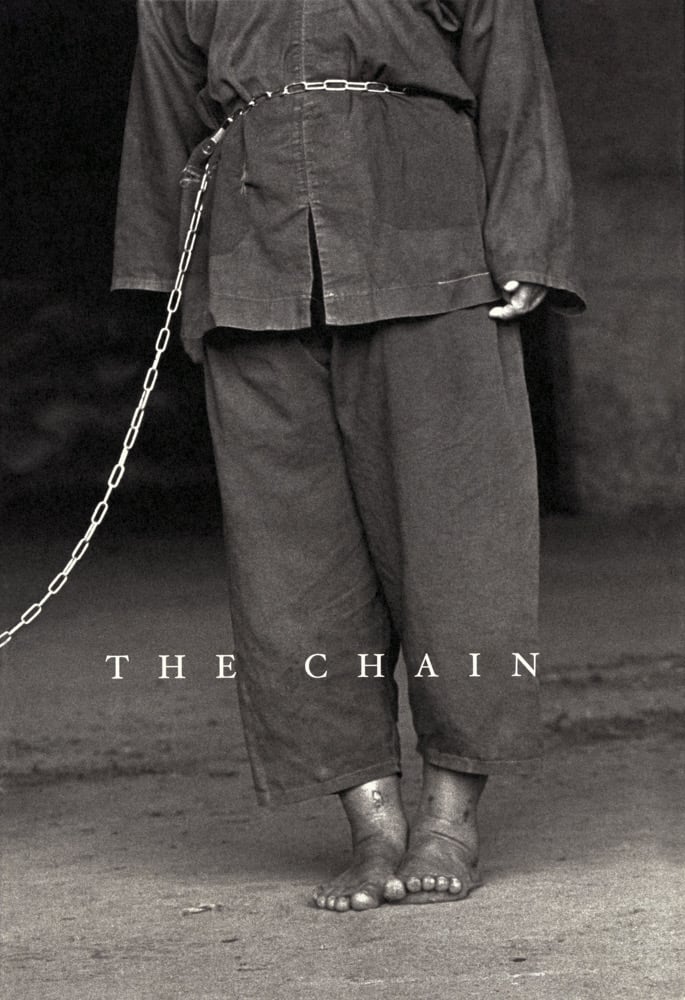
Between 1993 and 1999, Chien-Chi Chang made nearly twenty visits to Lung Fa Tang, a psychiatric facility in southern Taiwan, often staying for days or more than a week at a time. Residents were paired and locked together at the waist in a practice known as the Chain of Compassion. Over seven years, Chang photographed daily life and made 50 life-size black-and-white portraits.
The Chain became the beginning of a way of working that Chang would carry with him: staying close, returning, waiting, and letting the work develop over time. The chain itself was literal, but what it joined was more complicated. Years later, Chang would recognize that he had continued photographing different kinds of bonds ever since.


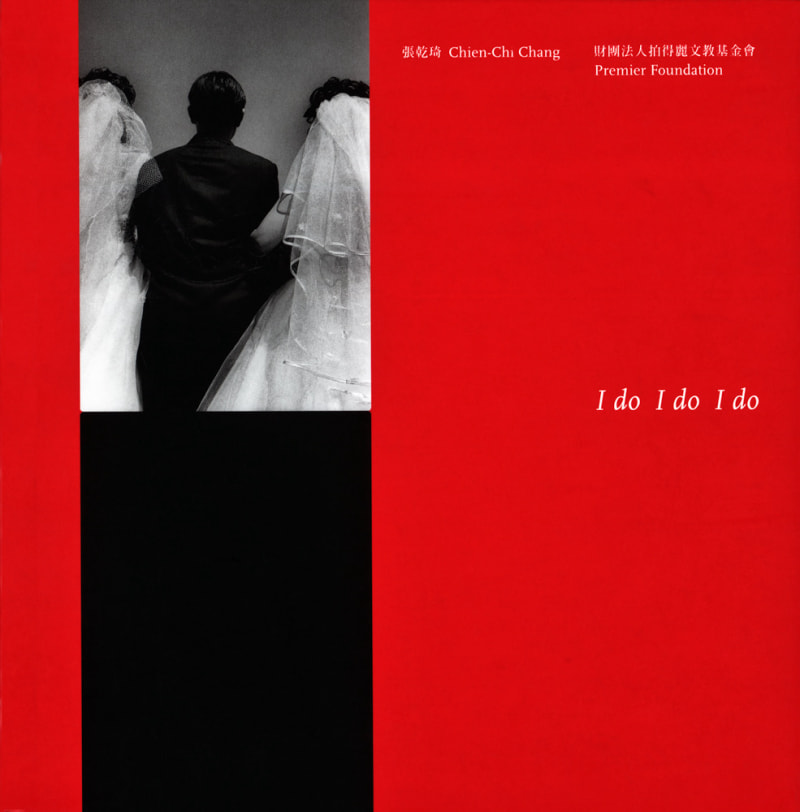
Taiwan’s wedding industry boomed during the 1990s and early 2000s, turning marriage into an increasingly elaborate spectacle. Months before the ceremony, couples posed for wedding albums in studios and on location, following rituals and expectations that extended far beyond the bride and groom.
Chang followed couples through the making of their wedding photographs and the wedding itself, never knowing quite what would happen next. The photographs being made around him were staged; his were not. As circumstances and light changed, so did the pictures. I Do I Do I Do looks at this world with a somewhat jaundiced eye, but the spectacle was only part of what interested him. Beneath it, two people were making a decision that would bind their lives together, whatever might follow.


Kaohsiung, 2000

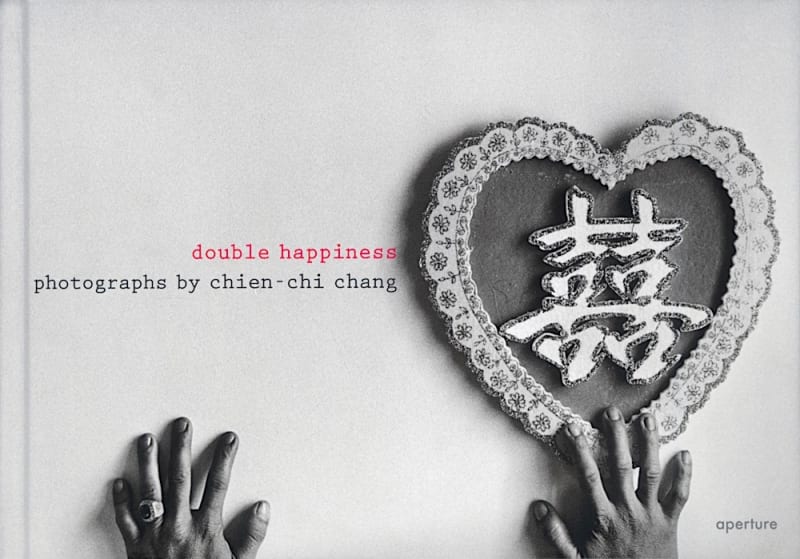
A brokered marriage industry brought Taiwanese men, many unable to find partners at home, to Vietnam in search of brides. Over six trips between 2003 and 2004, Chang photographed the matchmaking process again and again, building the work through repetition and the differences that emerged each time. Young women from poor rural families were presented to prospective husbands, sometimes dozens within hours. Decisions to marry were often made within a single day, under family and economic pressure, between people who did not share a language.
Double Happiness follows this process from matchmaking and selection to the wedding. The Chinese character 囍, or double happiness, traditionally celebrates marriage, but here two strangers could be bound together within days, across differences of age, language, circumstance, and expectation. Yet the photographs stop at the marriage itself. What follows cannot be known from the circumstances in which it began.


Young Vietnamese women recruited by marriage brokers are introduced to Taiwanese men seeking wives. Many marry within days of meeting. These photographs trace the process from selection and paperwork to the wedding ceremony. Ho Chi Minh City, 2003-2004

For more than three decades, Chien-Chi Chang has photographed undocumented immigrants in New York’s Chinatown and the families they left behind in Fujian. What began in crowded tenements and makeshift dormitories led him back to the villages the men called home. Living alongside them in New York and later with their families in Fujian, Chang followed lives divided by migration: the isolation of those who left, and the families sustained by their absence.
Photographed in black and white in New York and in color in Fujian, China Town moves between two worlds connected by distance and necessity. Families separate and reunite; children grow up and another generation begins to move. Still ongoing, the project has followed some of these families across years and generations.


New York City, 1998

Between 2007 and 2009, Chien-Chi Chang followed North Korean defectors escaping through a clandestine network across China and Southeast Asia to South Korea. He traveled with them from northeastern China through Laos and Thailand, moving by car, van, motorcycle, on foot, and by boat across the Mekong at night. They hid in safe houses and kept moving, knowing that capture could mean forced repatriation, imprisonment, torture, or death.
Escape from North Korea follows that journey through still photographs, video, and sound. There were long periods of waiting, followed by sudden movement: through forests, across borders, into vehicles, and back into hiding. Those who reached Thailand were eventually transferred to immigration detention before continuing to South Korea to begin another life.


Beginning in 2008, Chien-Chi Chang returned repeatedly to Burma, now Myanmar, photographing, filming, and recording life under military rule. Journalists were rarely granted access, and working inside the country meant moving carefully. Chang traveled widely, often with local contacts, knowing that both he and the people he met could be watched or listened to.
Surveillance was low-tech but pervasive. Sometimes people knew they were being followed; more often they could not know who might be watching or listening. After decades of living with that uncertainty, the possibility of surveillance was often enough: people adjusted what they said, where they went, and how they behaved. Burma, Land of Shadows grew from this atmosphere, where fear had become a form of self-censorship.


Viewer advisory: this video contains explicit scenes of intravenous drug use.
In 2011, Chien-Chi Chang went to Dar es Salaam on assignment for Médecins du Monde, documenting its efforts to reduce the harm caused by intravenous drug use and the spread of HIV. Staying in the neighborhood, Chang worked closely with people there, often returning late into the night. He used still photographs, moving images, and sound, eventually bringing them together in Bongo Fever.
Drug use was everywhere and often in plain sight: people injected in alleys and on the street, shared needles lay on the ground, and children grew up watching it as part of daily life. What began as a commissioned project became a stark record of a reality that was difficult to look at and impossible for Chang to soften.
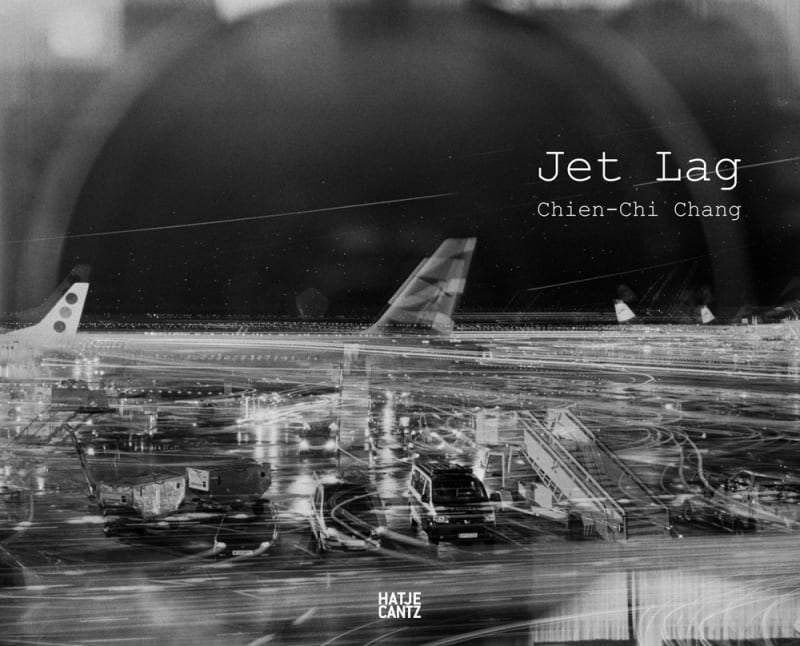
During years of near-constant travel, Chien-Chi Chang carried a Mamiya 7 loaded with black-and-white film as a visual diary. He usually exposed a single frame when something—a room, a person, a place, a moment—felt worth remembering. If nothing did, he made no photograph. A roll might be finished in a day or remain in the camera for more than a week. From hundreds of rolls, these solitary frames accumulated into a record of a life in transit.
Jet Lag moves through airports, hotel rooms, anonymous interiors, landscapes, and self-portraits, drawn from a much larger body of work. Chang ended the project in 2012, when his first child was born. The journeys continued, but leaving and returning no longer meant the same thing. Movement now carried another connection with it: the pull of home.


Vienna, 2010

For more than three decades, Chien-Chi Chang has photographed Taiwan, his country of birth, returning to it throughout years spent living and working elsewhere. This selection comes from the earlier part of that ongoing work, beginning as Taiwan emerged from martial law and moved into a new democratic era. Unlike many of Chang’s long-term projects, these photographs were not made around a single subject or story. They accumulated over time, whenever he returned.
Living elsewhere changed the way Chang saw the place where he grew up. Taiwan remained familiar, but distance made it possible to see it differently. The connection was never broken; each return renewed it and changed it. These photographs grew out of that continuing relationship with a place he had left but never entirely left behind.


Miaoli, 1997

Chien-Chi Chang first traveled to Ukraine in 2014 while researching a sound installation. When Russia launched its full-scale invasion in 2022, Chang returned within days. He was not a war photographer, but the invasion of a smaller country by a much larger neighbor made him think immediately of Taiwan, where he was born and where much of his family still lives. He felt he needed to witness and document what was happening for himself.
Chang has continued returning to Ukraine, living alongside soldiers in their positions. Zero Line takes its name from the shifting gray zone between opposing forces, sometimes only kilometers apart. Working there meant constant threat from drones and artillery, long periods of waiting, and movement in pitch darkness. Ukraine has become more than a project for Chang, as the war there has become increasingly relevant to Taiwan.


Poltava, 2023

After decades spent crossing borders in pursuit of other people’s stories, Chien-Chi Chang gradually turned his camera toward his own life. Begun in 2012 and made over many years in Graz, Austria, Home follows the world around his children as they grow. Made between journeys and during long periods at home, the photographs mark a different kind of time, measured less by where Chang has been than by what has been changing around him.
For much of his life, Chang believed he was nothing without photography. Having children changed that. Travel still takes him away, but coming home means returning to something that cannot be found anywhere else. The connection to his children gives departure a different weight, and return a different meaning. After a life spent leaving, Home is about what draws him back.